Logo Migrate
Logo da empresa
Solutions
Cases
Developers
Support
Resources
Login
Contact Us

Tax Reform

Prepare your company for the biggest transformation of the Brazilian tax system. The new rules are already underway and directly impact companies of all sizes.

This content explains the changes, how to prepare, and why acting now can make a difference for your business!

Understand the new tax landscape in Brazil

The Tax Reform approved by Constitutional Amendment No. 132/2023 marks the beginning of a historic transformation in the country's tax collection system. After decades of debate, Brazil is starting to replace one of the most complex tax systems in the world with a simpler, more transparent model aligned with international best practices.

This change directly impacts companies across all sectors, especially those involved in electronic tax management, such as issuers of NF-e, NFS-e, NFC-e, MDF-e, CT-e, and NFCom. The Tax Reform goes beyond changing taxes: it changes how taxes are calculated, reported, and collected, requiring technical, operational, and technological adaptations across various corporate processes.

In addition to replacing five consumption taxes (PIS, COFINS, ICMS, ISS, and IPI) with the creation of new ones — the Contribution on Goods and Services (CBS) and the Tax on Goods and Services (IBS) — the new model also introduces significant innovations such as destination-based taxation, the end of tax accumulation, the creation of the Selective Tax (IS), and a cashback mechanism for low-income families. It is a complex process that will demand significant operational, technological, and legal adjustments in different areas.

This scenario requires companies to have technical preparedness and strategic anticipation. Understanding the Tax Reform means more than just following rules — it’s an opportunity to reduce risks, avoid rework, adapt systems, and ensure competitive advantage.

What changes with the Tax Reform?

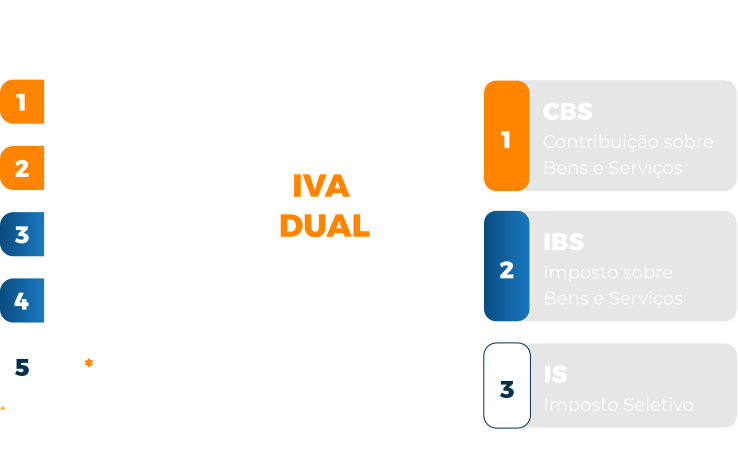
The Tax Reform replaces five current consumption taxes with two main ones:

Furthermore, taxation will occur at the destination (where the good is consumed), and no longer at the origin (where it is produced). The model will also adopt full non-cumulativity, meaning it will be possible to credit all previously paid taxes, reducing the cascading effect and the final cost of products.

Main changes

Understand the pillars that structure the Tax Reform and how they transform the way taxes are calculated, collected and managed in Brazil.

  • Taxation at Destination

    Tax will be charged where the final consumer is located, promoting revenue redistribution and reducing tax competition between states.
  • Selective Tax

    Created to discourage consumption of items harmful to health or the environment, such as alcoholic beverages, cigarettes and fossil fuels.
  • SIMPLE AND TRANSPARENT

    Fewer ancillary obligations, greater standardization and clarity in tax information on invoices.
  • END OF CUMULATIVENESS

    CBS and IBS will be fully non-cumulative. Companies will be able to use credits for taxes paid in previous stages, eliminating the “imposto sobre imposto”.
  • Cashback

    Low-income families may receive back part of the taxes paid.

Direct impact on Electronic Tax Documents

The Tax Reform brings structural changes that directly affect the issuance and management of electronic tax documents, requiring adjustments in issuing systems and ERPs.

  • New taxes and mandatory fields:

    CBS, IBS, and IS require specific configurations with new rates, incidence rules, and structuring of tax data in the invoices;
  • Complete review of technical layouts:

    The published Technical Notes already bring adjustments in XML schemas, validations, QR Codes, and print layouts;
  • Update in issuance rules:

    Changes in issuance deadlines, specific restrictions, and new treatments for contingency operations;
  • New CNPJ structure (alphanumeric):

    The introduction of letters will require adjustments in databases, APIs, validators, registrations, and integrations with government and suppliers;

The implementation of the Tax Reform extends until 2033

Read the timeline for the application of the Tax Reform

Constitutional Amendment No. 132 was approved, enacting the Tax Reform and establishing:

  • Gradual elimination of PIS, COFINS, ICMS, and ISS;

  • Partial elimination of IPI, which will remain only for the Manaus Free Trade Zone;

Complementary Laws responsible for regulating the new Brazilian tax system will be approved, directly impacting companies' tax systems.

  • A highlight in this process is the approval of Complementary Bill No. 68/2024, which was converted into Complementary Law No. 214, marking a key step in the implementation of the Tax Reform;

  • Publication of the first versions of the Technical Notes.

Start of the practical testing period for the new national tax model, with reduced rates applied.

  • During this phase, the following rates will be adopted: CBS (Contribution on Goods and Services) at 0.9% and IBS (Tax on Goods and Services) at 0.1%.

From 2027, full CBS collection begins, with the following highlights:

  • Elimination of the federal taxes PIS and COFINS;

  • Zeroing of the IPI rate (except for products from the Manaus Free Trade Zone);

  • Creation of the Selective Tax, aimed at taxing goods and services harmful to health or the environment.

Gradual replacement of ICMS and ISS by IBS. During this period, there will be a phased transition of tax rates.

  • 2029: 10% IBS / 90% ICMS and ISS;

  • 2030: 20% IBS / 80% ICMS and ISS;

  • 2031: 30% IBS / 70% ICMS and ISS;

  • 2032: 40% IBS / 60% ICMS and ISS.

New system enters into full effect, with:

  • Definitive elimination of ICMS and ISS;

  • Exclusive application of CBS and IBS, consolidating the dual VAT model.

2023

Constitutional Amendment No. 132 was approved, enacting the Tax Reform and establishing:

  • Gradual elimination of PIS, COFINS, ICMS, and ISS;

  • Partial elimination of IPI, which will remain only for the Manaus Free Trade Zone;

2026

Start of the practical testing period for the new national tax model, with reduced rates applied.

  • During this phase, the following rates will be adopted: CBS (Contribution on Goods and Services) at 0.9% and IBS (Tax on Goods and Services) at 0.1%.

2029-2032

Gradual replacement of ICMS and ISS by IBS. During this period, there will be a phased transition of tax rates.

  • 2029: 10% IBS / 90% ICMS and ISS;

  • 2030: 20% IBS / 80% ICMS and ISS;

  • 2031: 30% IBS / 70% ICMS and ISS;

  • 2032: 40% IBS / 60% ICMS and ISS.

2024-2025

Complementary Laws responsible for regulating the new Brazilian tax system will be approved, directly impacting companies' tax systems.

  • A highlight in this process is the approval of Complementary Bill No. 68/2024, which was converted into Complementary Law No. 214, marking a key step in the implementation of the Tax Reform;

  • Publication of the first versions of the Technical Notes.

2027

From 2027, full CBS collection begins, with the following highlights:

  • Elimination of the federal taxes PIS and COFINS;

  • Zeroing of the IPI rate (except for products from the Manaus Free Trade Zone);

  • Creation of the Selective Tax, aimed at taxing goods and services harmful to health or the environment.

2033

New system enters into full effect, with:

  • Definitive elimination of ICMS and ISS;

  • Exclusive application of CBS and IBS, consolidating the dual VAT model.

Every 5 years, there is the possibility of periodic review of tax benefits that reduce the taxation of specific sectors.

Definition: CBS stands for Contribution on Goods and Services; PIS is the Social Integration Program; Cofins is the Contribution for the Financing of Social Security; IPI is the Tax on Industrialized Products; ICMS is the Tax on the Circulation of Goods and Services; ISS is the Services Tax; and IBS is the Tax on Goods and Services.

Source: Constitutional Amendment No. 132/2023

Principles of the new taxation system

The new tax structure is based on constitutional principles that aim to make the system fairer, simpler, and aligned with the country’s realities.

  • Simplicity

    Aims to reduce the complexity of the tax system by unifying taxes and eliminating redundant obligations. This reduces operational errors, increases productivity, and lowers compliance costs.
  • Environmental Protection

    Taxes like the Selective Tax (IS) will allow higher rates for products harmful to health and the environment, encouraging more sustainable practices throughout the production chain.
  • Tax Justice

    Taxation will be more proportional to the taxpayer’s ability to pay. Mechanisms like cashback for low-income families and differentiated rates for essential items promote social equity and a fairer distribution of the tax burden.
  • Cooperation

    With the IBS Management Committee, the reform promotes shared management among the Federal District, States, and Municipalities, reducing tax disputes and promoting national standardization.
  • Transparency

    Consumers will clearly see the amount of tax paid on each invoice. This strengthens social oversight and promotes greater tax awareness — a gain for citizenship.

Technical and operational highlights

The Tax Reform directly impacts ERP systems, electronic tax document issuers, and tax management platforms. Key points requiring technical updates:

  • New taxes and calculation rules

    CBS, IBS, and IS will require new system configurations, with specific rules for rates, calculation, deduction, and credit compensation.
  • Updates in Technical Notes

    The Technical Notes for NF-e, NFC, NFS-e, CT-e, MDF-e, and NFCom already include new fields, validation rules, and obligations, such as NT 2025.002 and integration with the national NFS-e Superlayout.
  • Alphanumeric CNPJ

    Starting in 2026, the CNPJ may contain letters. This will require a review of databases, integrations, and APIs that validate CNPJs.
  • Split Payment

    Implementation of split payment logic at the time of sale, with automatic tax transfer to federative entities. This directly impacts payment methods' structure and cash flow.
  • Cashback

    Systems will need to track the consumption of low-income taxpayers (linked to CadÚnico), calculate the amount to be refunded, and integrate with the government reimbursement database.
  • End of NFC-e for CNPJ

    The issuance of NFC-e will be prohibited for transactions with legal entities. In these cases, NF-e will become mandatory, requiring adjustments in the retail issuance flow.

Want to know more about the impacts of the Tax Reform?

We have prepared comprehensive and updated courses so you can master all the changes and stay ahead in tax management.

Ideal for those seeking a deep and integrated understanding of the Tax Reform.
  • +10h of premium content
  • NF-e, NFC-e, CT-e, MDF-e, NFCom and NFS-e
  • Structured learning schedule
  • Special discount for Migrate customers
For only
12 x R$ 158,33
Total of R$ 1,899.90
Buy now!Learn more about the course

Want to learn quickly and objectively?

Check out our individual courses, with segmented content so you can focus on what you need most.

COURSE 01

12x R$41.36

R$ 399.90

Introduction to Tax Reform

Legal basis, impacts, and necessary adaptations for your company in the new era of taxation.

Sign up now!Learn more about the course
COURSE 02

12x R$41.36

R$ 399.90

Impacts of the Tax Reform for NF-e / NFC-e

Discover how the Tax Reform directly affects the issuance and management of NF-e and NFC-e.

Sign up now!Learn more about the course
COURSE 03

12x R$41.36

R$ 399.90

Impacts of the Tax Reform for CT-e / MDF-e

See how the Tax Reform transforms the issuance and management of CT-e and MDF-e.

Sign up now!Learn more about the course
COURSE 04

12x R$41.36

R$ 399.90

Impacts of the Tax Reform for NFCom

Transformations in the telecommunications sector and necessary adjustments for NFCom issuance.

Sign up now!Learn more about the course
COURSE 05

12x R$41.36

R$ 399.90

Impacts of the Tax Reform for NFS-e

Understand the changes that impact NFS-e issuance in more than 5,000 municipalities.

Sign up now!Learn more about the course

NOVAS REJEIÇÕES COM A REFORMA TRIBUTÁRIA

Você já entendeu como as novas regras fiscais impactam o seu sistema?

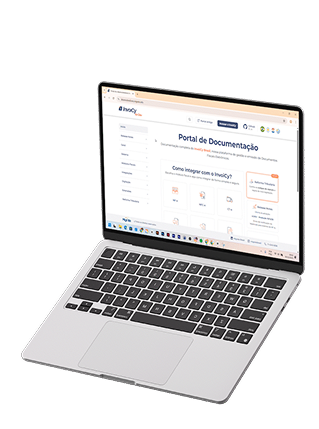
Consulte os códigos de rejeição no PORTAL INVOICY FOR DEV

ACESSAR AGORA!
Reforma Tributária
ACESSAR AGORA!
Migrate - Plataforma de Migração de Dados
Nos contate por emailSiga-nos no InstagramSiga-nos no LinkedInSiga-nos no YouTube

Sobre

  • Sobre nós
  • Carreiras
  • Cases
  • Política de Privacidade

Invoicy Brasil

  • Home
  • Emissão NFS-e
  • Captura NFS-e
  • Emissão SEFAZ
  • Captura SEFAZ
  • Emissão GNRE
  • Digitação NF-e, CT-e e MDF-e
  • Dashboard NFC-e e NFS-e
  • Compliance NF-e e NFC-e
  • Certificado Digital
  • Mail
  • Leitura OCR
  • Tributos Municipais
  • Interface Customizada
  • Formas de integração

Recursos

  • Blog Brasil
  • Reforma Tributária
  • Atendimento
  • Contatos
  • Desenvolvedores
2026 Migrate - Todos os direitos reservados.
Em conformidade com a LGPD
Migrate Brasil
R. Padre Cacique, nº 985 - 2 piso
98910-000 - Centro - Três de Maio - RS

Talk to a specialist

Reforma Tributária